
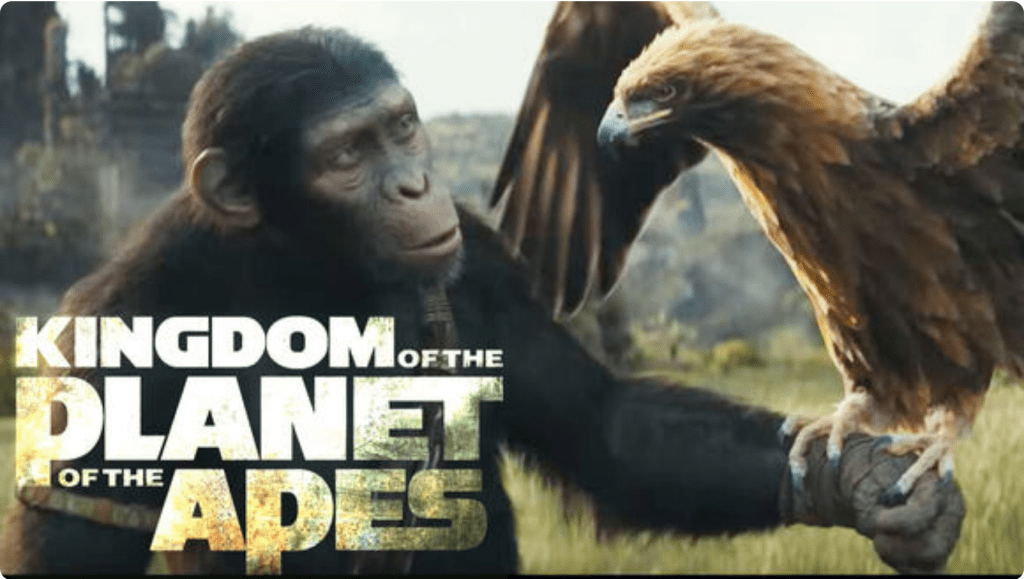
By the looks of “Kingdom of the Planet of the Apes,” it promises much of the same in the depiction of the apes’ appearance.
I’ve noticed something quite peculiar about the Planet of the Apes movies and how the Simians are portrayed. And yes, I went back and watched all of them, including Tim Burton’s failed reimagining of the original film.
And after seeing the trailer to the upcoming movie Kingdom of the Planet of the Apes, as far as I can tell, it’s the same trope: white-faced apes vs. black-faced apes.
Before I go into it, here’s some background on apes’ physical features—chimpanzees in particular.
Understanding chimpanzee pigmentation
Chimps are born with relatively fair skin. This pale complexion is particularly noticeable as their bodies are not heavily covered with hair at birth. But as they get older, their skin begins to pigment, particularly in the face and hands. Just like in humans, melanin production in chimpanzees increases over time with constant sun exposure. This leads to darker skin, but theirs is dramatic. Generally, around 8 to 10 years of age, their pigmentation is usually fully developed.
Light and Dark protagonists and antagonists in the new trailer
In the 20th Century Fox new trailer “Kingdom of the Planet of the Apes,” it focuses on who is assumed to be the protagonist, and not surprisingly, he’s of a lighter complexion, to be fair, though he seemed to be an adolescent—one of Caesar’s descendant, perhaps.
In contrast, near the end of the trailer, there’s a chimp wearing a crown that delivers the line “What a wonderful day!” which is more than likely a major villain in the movie, and of course, he’s highly pigmented. I’m basing this assumption on the entire work of the series. Still, it’s plausible that he is benevolent, but we won’t know until the movie comes out.
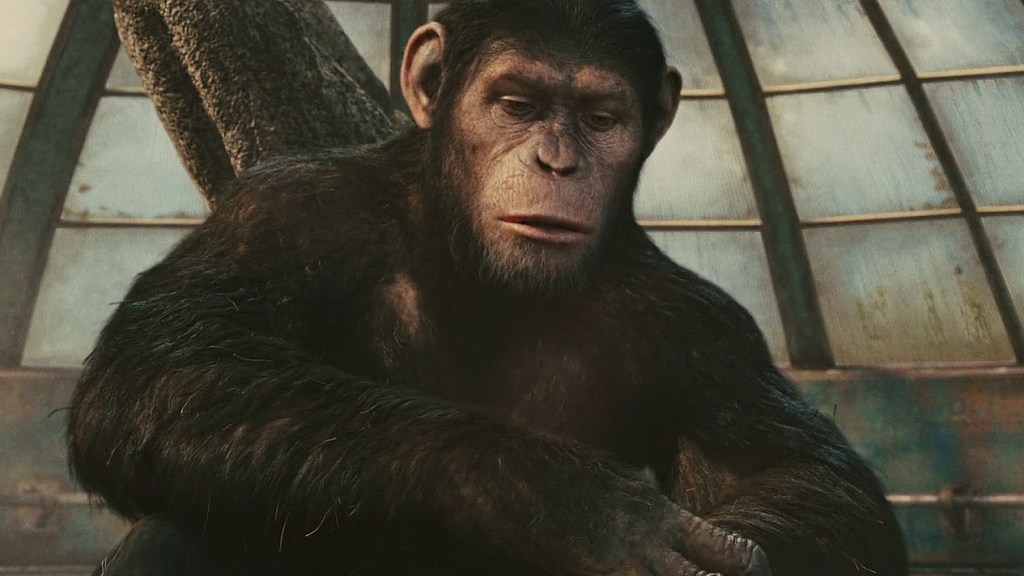
Skin tone bias in the original and reboot series
In the Planets of the Apes series, reboot or otherwise, you’ll be hard-pressed to find any of the adult hero chimps, even slightly melanin; the villains, on the other hand, are always darker. Why is that?
If we start with the original “Planet of the Apes” film series, all the most “enlightened” chimps, even the orangutans, are portrayed as fair-skinned, while the gorillas, on the other hand, the more violent and militaristic, are darker with black faces, which is perfectly reasonable considering that actual gorillas are pigmented.
While the original is a great conceptual movie, it nevertheless still reeks of the undertone of the white savior tropes. But that can be explained away as a sign of the era in which it was made, and so that is to be expected.
Caesar’s unnatural pigmentation journey
Now, given how much we know about chimps, why does this overt trope still persist in the reboots? In the 2011 reboot, “Rise of the Planet of the Apes,” we’re introduced to Caesar. At the beginning of the film, Caesar is an infant, just born
As the movie progresses, we see him grow and develop over several years. He’s mostly kept indoors and, once in a while, given the opportunity to roam in the woods. By the time he leads the uprising, he is approximately 5 to 7 years old. So knowing how chimps’ pigmentation progresses over time, his skin tone isn’t much of an issue in this movie.
Needless to say, the more aggressive, less hairy Alpha male in the ape sanctuary, Rocket, where Caesar was sent, has significantly more melanin. Although by the second and third installments he became one of Caesar’s most trusted generals.
When “Dawn of the Planet of the Apes” (2014) rolls around, it’s been several years since the uprising and the rebel simians disappeared into Muir Woods.
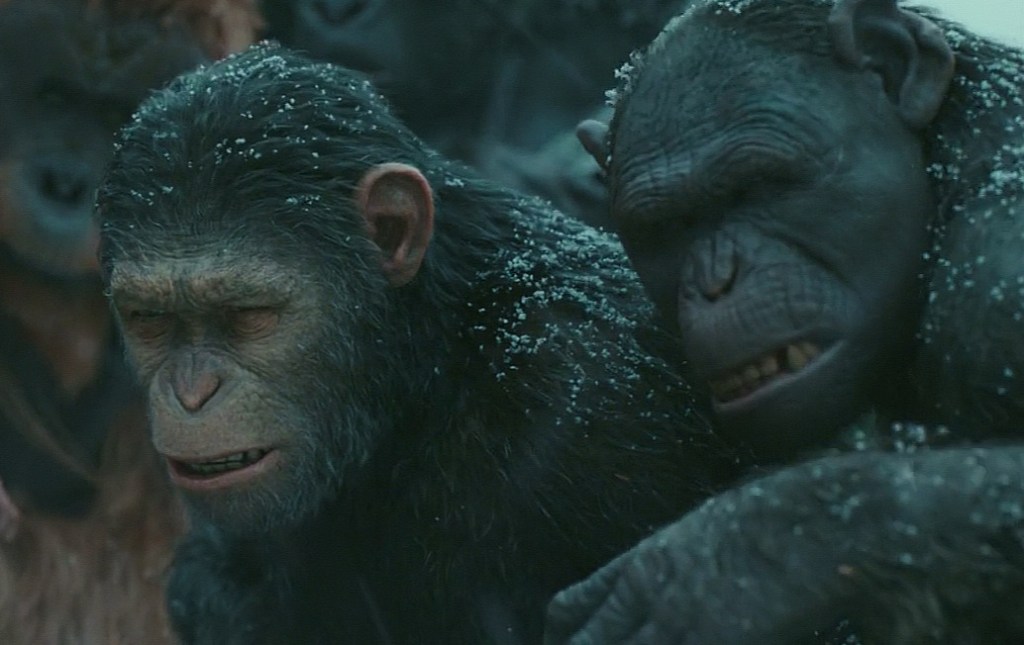
Between “Rise of the Planet of the Apes” (2011) and its sequel “Dawn of the Planet of the Apes” (2014), approximately ten years have passed in the storyline. “Rise of the Planet of the Apes” ends with the onset of the Simian Flu pandemic, while “Dawn of the Planet of the Apes” picks up a decade later, showing a world dramatically changed by the virus and the rise of the intelligent ape civilization led by Caesar.
So Caesar is about 16 to 18 years old. But instead of illustrating the natural progression of a chimpanzee skin tone, Caesar actually gets lighter. Koba, on the other hand, who turned out to be one of the main protagonists this time around, gets darker in shade.
By the time of “War for the Planet of the Apes” (2017), approximately four years had passed. This relatively short time focused on the escalating conflict between apes and humans. Caesar is still as pale as ever.
The decision to keep Caesar relatively pale, especially as he ages, diverges from the natural progression observed in real chimpanzees. In contrast, by the third movie, all the adult chimpanzees and gorillas were now highly pigmented, except for an albino gorilla named Winter. The few orangutans sprinkled in the movie still stayed true to the real-life animal.
Lightness as goodness in visual storytelling
Why has Caesar remained pale? Some might say it’s to help express more emotion. Still, this idea underestimates the audience’s ability to connect with characters of varying appearances. Moreover, with their dark features, Rocket and Koba have complex emotions that still manage to carry through their facial expressions.
When it comes to depicting leading anthropomorphic animals and made-up creatures in movies, the default always seems to be based on a white standard. One other possibility for this is that filmmakers believe that a lighter-skinned protagonist would be more relatable or sympathetic to a wider audience. As such, this concept has been a recurring theme in visual storytelling, where lighter features are often associated with good and darker features with bad.
The choices made in depicting characters in the Planet of the Apes series are not just artistic decisions but also reflections of broader societal biases. Nonetheless, “Planet of the Apes” series is an amazing work of science fiction, but it also serves as a lens through which we can examine our own biases and assumptions in storytelling.
The Planet of the Apes series is available on all streaming platforms




 Screen Rated