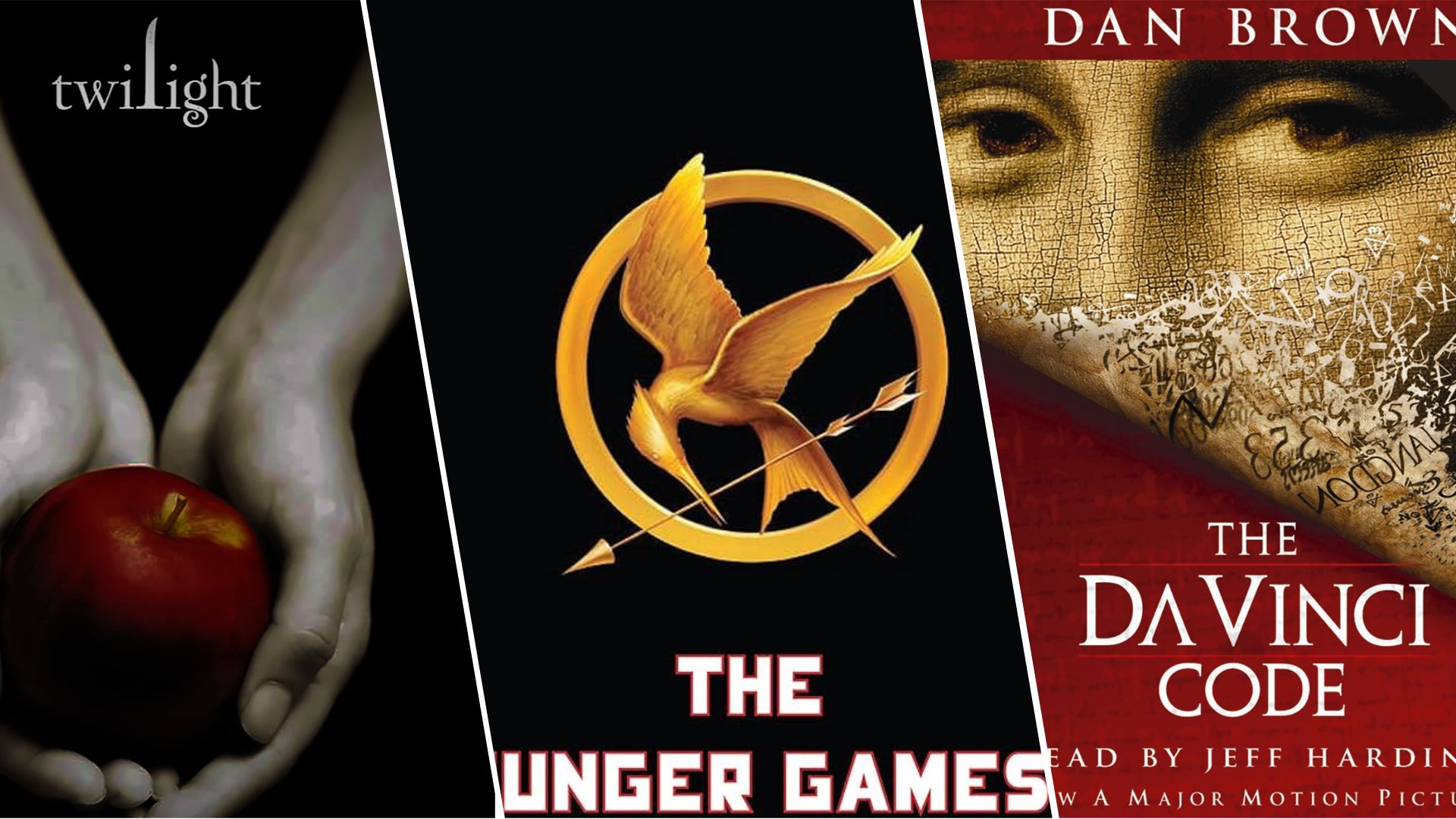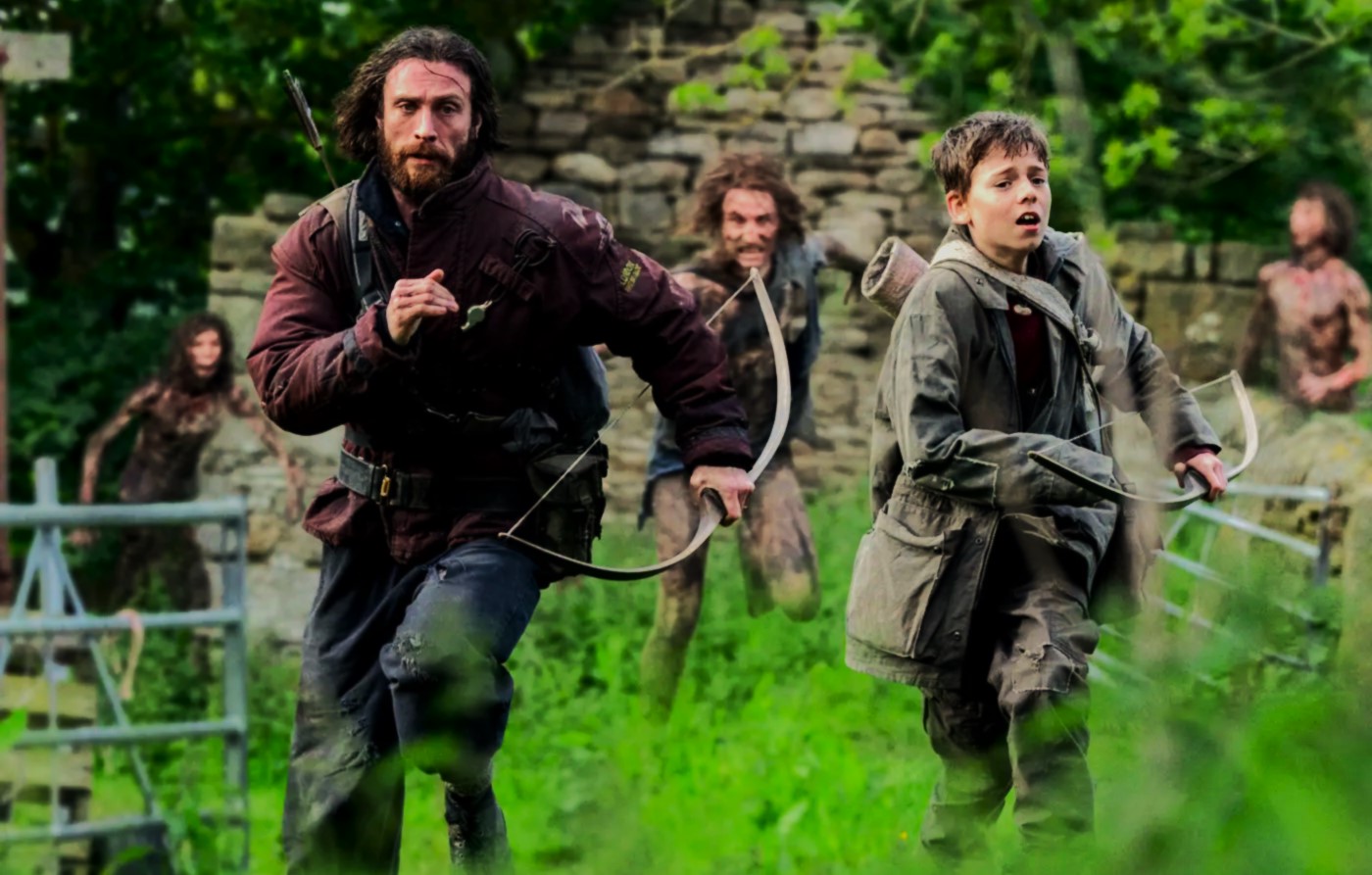
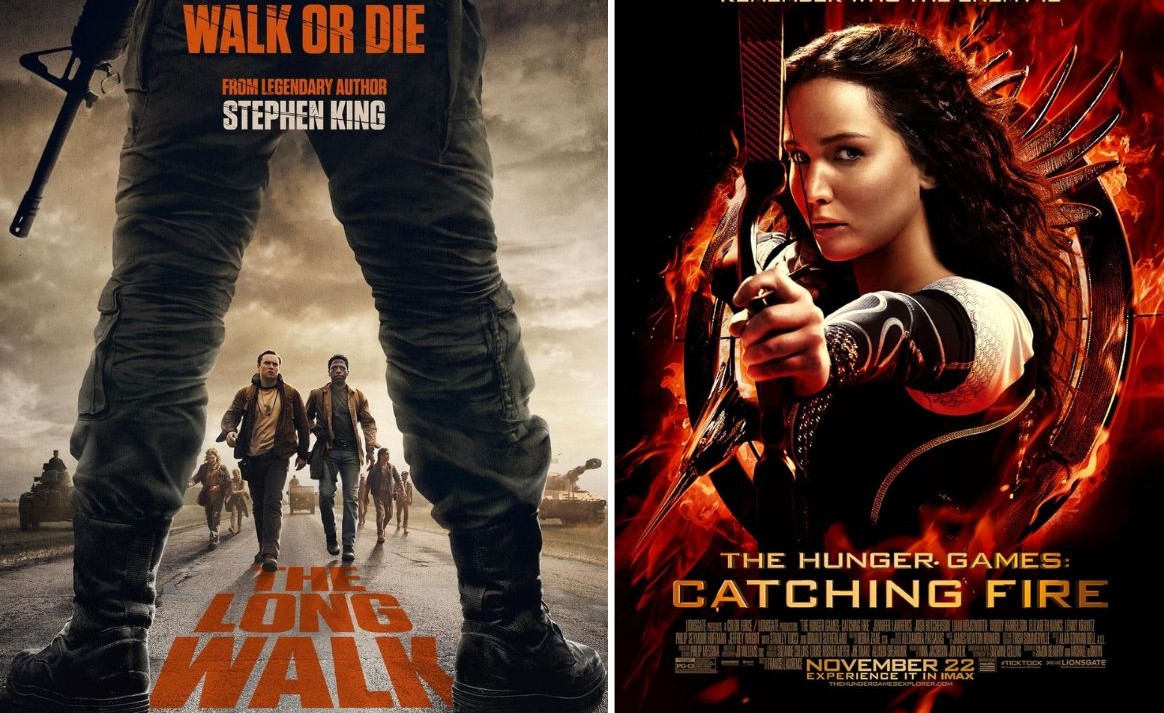
With Stephen King’s The Long Walk turned into a film, comparisons to The Hunger Games will be inevitable. Viewers will recognize the teen competitors, the national audience, the cameras, and the only one survivor rule. Yet the experience will be different because the engine is different. The Long Walk is not a springboard to revolution. It’s a march into the core of human endurance and how children try to hold onto dignity when everything around them says dignity is a joke. If the movie sticks to the book’s spare rules and relentless pace, it will feel like horror that never raises its voice.
Both stories use children to measure the temperature of a sick society. Both say more with their games than any speech about governance could. The Long Walk strips the story to the bone and asks how long a human can keep going when the only prize is permission to stop. The Hunger Games dresses up child cruelty in feathers and fire and asks how long a society can keep doing this before someone shoots an arrow at the cameras. Either way, the mirror they hold up shows the same reflection.
Children offered up in brutal public rituals
Both stories work on the same idea that has deep roots in dystopian fiction. A powerful regime turns children into tributes, then turns their suffering into a public ritual that keeps the masses entertained and afraid. In The Hunger Games, two tributes from each district are forced into a televised arena where only one can survive. In The Long Walk, one hundred teenage boys from across the country step onto a road and are told to keep walking at four miles per hour. Fall below that speed too often and you are shot. The last boy still moving wins.
The similarity is not accidental in the sense that both are part of a long conversation in fiction about sacrifice, state violence, and the spectacle of cruelty used for control. You can feel the undercurrent of Shirley Jackson’s “The Lottery,” Roman gladiator games, and the way modern media can turn suffering into ratings pulling at the theme. Thought the frame is similar for both, the experience of reading them could not be more different.
A game that looks simple versus a game that looks cinematic
On paper, The Long Walk has the simpler premise. Walk or die. Each boy gets warnings when he drops below the pace. Three warnings within a rolling window and the soldiers on the roadside give him his ticket, which is a sanitize way to say a bullet. There are no traps, no engineered weather, no booby-trapped forests. The rules never change. The terror comes from the body’s slow failure, the mind’s erosion, the realization that there is no safe corner of the arena because the arena is a straight line with no exits.
The Hunger Games is an engineered spectacle. The arena is designed for television. The Game makers can conjure fire, tracker jackers, mutts, drought, flood, anything that will spike drama. Sponsors can parachute aid to favorites. Alliances form and break. The rule set can be rewritten on the fly, sometimes even in the middle of the event, because the show must go on. Where King strips the contest down to a single rule and lets psychology do the rest, Collins builds a twisted toy box of challenges where survival generates action.
Consent, coercion, and the lie of choice
Both stories play with the idea of consent, which is part of what makes them disturbing. The boys in The Long Walk “volunteer” by entering their names, passing a physical, and stepping up to the starting line. It is a choice, but it feels like a choice cornered in by poverty. The government rewards the winner with a Prize so large it warps young minds into volunteering for the Long Walk. The structure begs you to ask what kind of world creates boys who choose this.
In The Hunger Games, the coercion is blunt. A lottery is used. Names go in a bowl, the camera rolls, and the Capitol selects their victims. Katniss volunteers to save her sister, which is heroic, yet still sits inside a machine created to crush families and broadcast their pain. All of this is designed to keep the defeated in line. Both books expose how authoritarian systems manufacture consent or pretend to, then claim moral cover because the victims “chose” or were “randomly selected.”
Spectators and the economy of suffering
Another strong overlap is the crowd. In The Long Walk, people line the roads, cheer, jeer, throw food, and watch through the night as boys wobble, hallucinate, and collapse. The soldiers and the Major maintain the fiction of order. By eventually you understand that the real engine of the event is the public appetite to witness the limit of human endurance and the instant of death.
In The Hunger Games, the audience is explicit and national. There are stylists, televised interviews, betting markets, and a sponsor economy that monetizes charisma and pain. The Capitol treats tributes like influencers with a death sentence. The districts must watch. The message in both books is the same. When violence becomes ritual entertainment, it trains a society to accept cruelty as normal.
Horror that creeps versus horror that detonates
So is The Hunger Games horror. Yes and no. It depends on what you mean by horror. King’s book is horror in the old sense, a slow tightening of a vise. The walking never stops. The boys talk, joke, share stories, and then one by one they get their ticket. You feel the grind in your calves and lungs as if it’s happening to you. The violence lands with a dull, sick thud because it is always the same gunshot and always a child.
Collins writes from a young adult angle, which shifts tone and focus. Her story includes terror, gore, and moral injury. It also includes hope. Katniss can outthink the arena, outshoot opponents, outmaneuver the Capitol’s propaganda, and eventually help spark a rebellion. The moral weather changes from dread to defiance. The same premise that reads like nihilism in King becomes a springboard to resistance in Collins. That does not mean The Hunger Games is not scary. It means the fear detonates in bursts inside a plot that is designed to move toward revolution, love, and coalition.
Friendship, mercy, and the cost of winning
The two books also rhyme in how they treat kindness under pressure. In The Long Walk, Garraty builds fragile bonds with other walkers, especially McVries. They joke, share food, and sometimes show mercy by warning each other when a pace dips. Yet every moment of compassion sits under the shadow of the rule that only one boy survives. When a friend stumbles, the kind thing would be to help him, but the rational thing is to keep your speed. The cruel math turns decent kids into silent executioners.
In The Hunger Games, alliances are tactical and heartfelt. Katniss and Rue are tender together. Katniss and Peeta play a romance that becomes real in complicated ways. Even in the arena there are flashes of mercy and rebellion that point beyond the game. Still, the victory condition has a cost. The winner returns with trauma and the knowledge that a system made them a symbol in order to keep others in line. Both books ask, “What does winning mean when the game is cruel by design?”
Bodies as battlegrounds
King and Collins both write how the contest affects the body differently. King focuses on heat rashes, blisters, blood in socks, cramps, and the weird float of a mind that has not slept in days. The body becomes a metronome ticking toward collapse. Collins, instead, writes the body as a survival toolkit. Katniss tracks calories, water, wounds, and weapons. The arena punishes the unprepared and rewards those who can read terrain and weather. In both, the government uses teenage bodies as billboards for power. And this message is written in sweat, scars and death.
Class, region, and the geography of control
The Long Walk is national, yet strangely intimate. The road threads through small towns and forest edges. Local pride flares when a home state boy passes. King sketches an America where the countryside looks familiar but the rules are bent just enough to feel wrong. That almost-normal geography deepens the horror because it makes the spectacle feel like it could be happening down your street.
The Hunger Games on the other hand is openly classist. The Capitol is wealthy and decadent. The districts are resource colonies, each forced to specialize in a single product and kept hungry on purpose. The arena locations change yearly. This adds a layer of unpredictability and lets the Capitol showcase its total control. Both geographies are about power. King’s map shows how cruelty hides inside ordinary spaces. Collins’ map shows a core that feeds on its periphery.
Endings and what they say
Another key difference is how the stories land. King is more ambiguous with his story. Yet within that ambiguity is the psychological breaking point of a boy who has walked too far for too long. It is bleak and honest about the way a system like this grinds people down until even victory looks like a failure. Collins builds a trilogy that moves from survival to insurgency to civil war. By the end you get hard-won change, at a terrible price, and the question of what kind of world grows after a revolution.
That split in endings explains why one is usually shelved as horror and the other as young adult dystopia. The Long Walk offers no structural exit. The horror is the system and the system stands. The Hunger Games offers a door, even if it opens onto a landscape filled with grief and compromise.
Influence without accusations
The Hunger Games feels like it is in conversation with The Long Walk, and that is fair. They spring from the same well of ideas about authoritarian rule and youth sacrifice. It is also fair to say that both sit inside a bigger family of stories about ritualized death contests. King himself explored televised death in The Running Man. There are many branches feeding the same river. The healthiest way to read the connection is not as a one-to-one borrowing, but as two strong writers bringing different tools to a shared nightmare.