
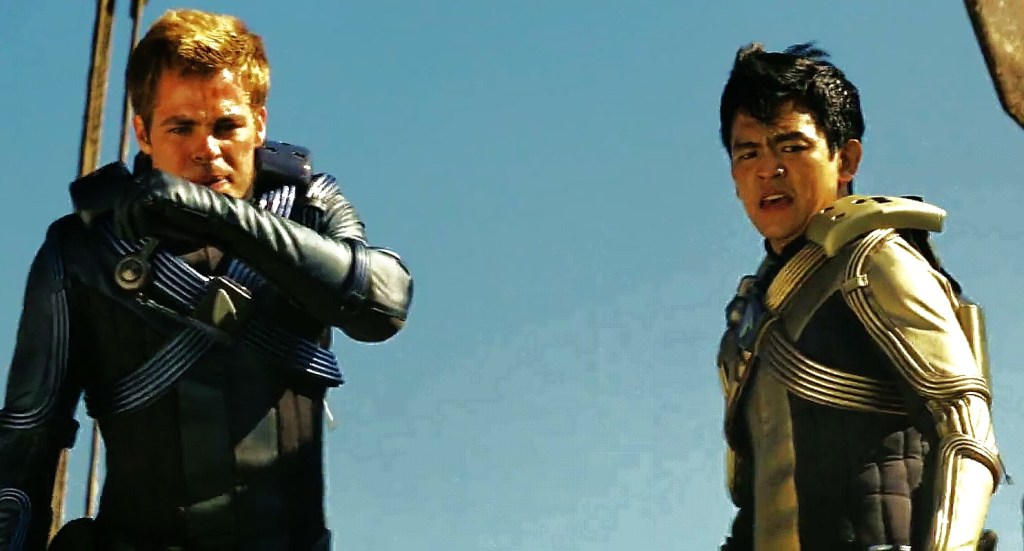
When J.J. Abrams took the helm of the Starship Enterprise with the launch of the 2009 “Star Trek” reboot, fans were treated to a reinterpretation of Gene Roddenberry’s iconic universe.
Dubbed the Kelvin Timeline, this alternative reality introduced us to younger versions of Kirk, Spock, McCoy, and the rest of the original crew. However, while the reboot brought a different energy and modern special effects to TOS, it wasn’t without its turbulence, particularly when it came to glaring story line consistency.
Chekhov’s beam-up blues
In the 2009 Star Trek, we watched a young Pavel Chekhov perform an amazing mid-air transport, saving Kirk and Sulu from becoming splats on the surface of Vulcan. This set a precedent for the capabilities of the enterprise’s transport technology and also shows Chekhov’s skills as not only a pilot but brilliant engineer.
Fast forward to 2013’s Star Trek Into Darkness, where the enterprise encounters one of its deadliest foes, where we hit a consistency snag.
In this sequel, a rogue Starfleet agent named John Harrison stages a terrorist attack. Determined to capture Harrison, Kirk and his crew go on a manhunt that takes them to the Klingon home world. However, they soon discover that Harrison is actually Khan, a genetically engineered superhuman from the past, seeking revenge on Starfleet for betraying him.
Khan eventually takes control of Starfleet’s powerful new warship and, with it, critically damages the Enterprise. Enterprise loses power, succumbs to Earth’s gravity, and starts to fall towards the planet.
In a desperate move to save his crew, Captain Kirk enters the radioactive power chamber to realign the warp core. He stabilizes the ship’s power, allowing it to regain control, but at a terrible personal cost—Kirk is exposed to a lethal dose of radiation. Enraged, Spock beams down to earth to chase Khan.
McCoy realizes that Khan is the key to saving Kirk and needs him alive. He asks that Khan be beamed aboard the Enterprise.

During this critical moment, Chekhov suddenly claims he’s unable to perform the transport because the targets are moving. Wait, what? Didn’t we establish Chekhov could catch falling bodies four years prior?
This apparent inconsistency left me scratching my head, wondering whether the transport technology had inexplicably regressed or if dramatic necessity simply trumped continuity. It had me questioning the internal logic of the universe Abrams recreated.
The politics of space real estate
Then there’s the issue of Federation politics, which seemed a bit contradictory by the time we reached 2016’s Star Trek Beyond. The movie presents the Federation’s newest starbase, Yorktown, as a massive, shining snowball of peace and cooperation floating in space.
A valid question arises from McCoy: why not simply rent space on a planet instead of using so much resource to build Yorktown? Spock’s response about avoiding “geographical favoritism” to prevent diplomatic tensions sounds reasonable at first—until you consider that both the Federation headquarters and Starfleet Academy are comfortably situated on Earth.
So why does Earth get a pass while other planets don’t? Are Earth’s historical significance and role in founding the Federation enough to override the concerns Spock raises, or is there an element of convenience at play here?
In any case, as with any long-running series, I guess a few plot inconsistencies are perhaps inevitable.



 Screen Rated