
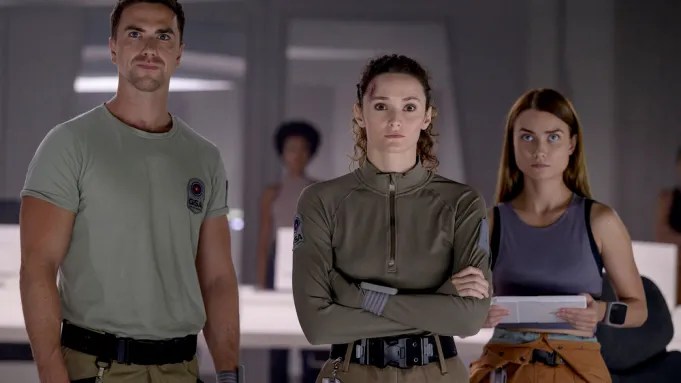
Syfy’s latest space adventure series, The Ark, may not be the next Battlestar Galactica, but it’s got enough entertainment value to make it worth your time, especially if you’re a fan of campy, classic sci-fi tropes. With its first season setting the stage with a mix of disaster-of-the-week scenarios and character drama, The Ark throws back to the space faring adventures many of us grew up watching.
Season one: campy, catastrophic fun
Season one of The Ark introduces us to the crew of Ark One, a group of unlikely survivors thrust into leadership roles after a disaster leaves them stranded in deep space. From the get-go, the show leans heavily into its campy side, with catastrophes that seem designed to keep you on the edge of your seat—sometimes bordering on the absurd. But that’s part of the fun. There’s a certain appeal to watching these characters deal with one crisis after another, even if some of the drama feels a bit forced.
The first season had its moments. The mix of personal conflicts, survival challenges, and space opera elements kept things moving, even if the writing sometimes felt like it was trying too hard to hold your attention. But if you embraced the camp, you’re in for a good time.
Season two: gets wilder, and still entertaining
Fast forward to season two, and The Ark dives headfirst into more wildly cliché sci-fi territory. We’ve got incorporeal energy beings, parallel universes, and all the classic tropes that make you feel like you’ve stepped back into the golden age of TV sci-fi. Strangely enough, though, the story feels more coherent this time around. The showrunners, Dean Devlin (Stargate, Independence Day) and Jonathan Glassner (Stargate SG-1), seem to have found their groove, striking a balance between the show’s campy roots and the by-the-number sci-fi stories that fans of the genre are familiar with.
The official synopsis sets the stage nicely: “The Ark takes place 100 years in the future when planetary colonization missions have begun as a necessity to help secure the survival of the human race. In season two, after the crew of Ark One reaches their destination and finds it uninhabitable, they must survive long enough to locate a new home for themselves.
The cast growing into their roles
One of the highlights of season two is watching the characters grow into their roles. Christie Burke matures as Lt. Sharon Garnet, who was reluctantly thrust into command after the first season’s disaster. With a season under her belt, Burke’s Garnet is more confident, and more interesting to watch. The dynamic between the crew members has also evolved, with each character facing new challenges that reveal deeper layers of their personalities.
Devlin and Glassner have done a great job of pushing the characters in new directions, even as it leans into familiar sci-fi tropes. “In season one, the fun of the concept is that it’s a group of people who are not leaders that were thrust into leadership positions,” Devlin explains. “Season two is, ‘Okay, they’ve evolved, so how do they handle this?’ It really allowed it to go in directions that will not only be surprising for the audience, but it was surprising for us as we were developing it.”
The science: anchored in reality, sort of
While The Ark isn’t trying to be a hard sci-fi series, Devlin and Glassner have made an effort to anchor some of the show’s concepts in real science—or at least in ideas that could be plausible. The new destination in season two, the Trappist System, is a real star system located 40 light-years away from Earth, and it’s believed to contain several potentially habitable planets.
Devlin himself acknowledges that they’re not trying to create a show that’s scientifically perfect. “Our show is really about the characters and dealing with some science fiction concepts that we think are fun,” he says. And that’s exactly what delivers—fun, sci-fi that doesn’t take itself too seriously.
While The Ark is no Battlestar Galactica or The Expanse, it’s a good enough entry in the genre that’s worth watching.






 Screen Rated