
One of the classic tropes in science fiction movies is the alien invasion. It’s almost become a rite of passage for humanity to face off against some super-advanced, technologically superior species that has crossed the vastness of space to conquer Earth. The idea makes for one hell of a story. But if you think about it, the most implausible part of these movies isn’t the existence of aliens or their desire to invade—it’s the fact that humans manage to always defeat them.
We’re talking about species that have mastered interstellar travel, with technologies far beyond our wildest dreams, yet somehow, the scrappy underdog humans that have only manage to go as far as the moon, come out on top? That’s hubris at its finest.
Let’s take a look at three popular movies that defeats the aliens and examine just how far-fetched they are.
Edge of Tomorrow
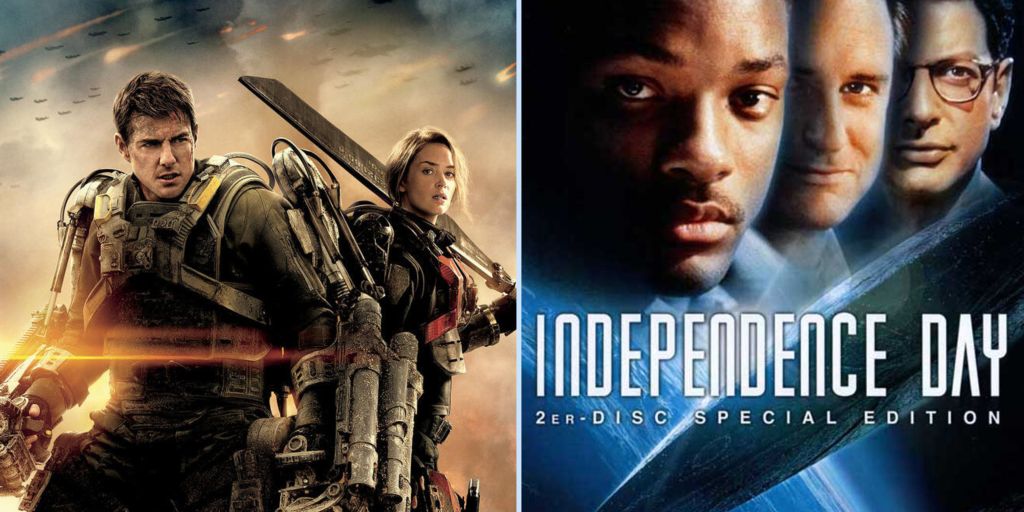
Edge of Tomorrow is one of the better examples of a more grounded alien invasion movie—at least as grounded as a movie with time loops can be. The Mimics, an alien species, have taken over Europe, and humanity is on the brink of collapse. Enter Major William Cage played by Tom Cruise, who is forced to relive the same day over and over again after dying in battle, gradually learning how to defeat the aliens through trial and error.
The movie’s twist is that the Mimics themselves are playing with time, allowing them to see human strategies and be one step ahead. While it’s an interesting concept, the movie still falls into the same trap: humans, through sheer determination and a few well-timed deaths, figure out how to destroy the alien threat.
But here’s the thing—if the aliens are advanced enough to manipulate time, shouldn’t they have a foolproof plan for dealing with pesky humans? It’s one thing to have a technological edge, but time manipulation is a whole different ball game. The fact that the aliens are outsmarted by a guy who’s learning to be a soldier on the fly is a bit of a stretch.
Battle: Los Angeles
In Battle: Los Angeles, a favorite of mine, we have a more traditional boots-on-the-ground alien invasion story. The film follows a group of U.S. Marines as they fight to defend Los Angeles from a full-scale extraterrestrial assault. The aliens in this movie are resource hunters, invading Earth to strip it of its water (because, of course, Earth has the only water in the universe).
While the fellowship between the Marines is deep, the idea that a small military unit could hold off an army of aliens with advanced technology is, well, optimistic at best. The aliens have drones, advanced weapons, and battlefield technology that we’ve never seen before. Yet, the Marines’ superior tactics (and some good old-fashioned American grit) allow them to win the day.
In reality, even if aliens weren’t drastically more intelligent than us, their technology would likely be so advanced that our weapons and tactics would be laughable. This isn’t just a matter of having better guns or tanks—the aliens would probably have systems we can’t even comprehend, let alone counter.
Independence Day
Perhaps the most egregious example of human hubris comes from Independence Day. This movie is a fan favorite, no doubt, but come on: a species capable of building planet-sized ships and traveling across light years is unlikely to be taken down by a laptop virus. Yet that’s exactly what happens. Jeff Goldblum’s character, using nothing but a 1990s-era computer and some clever coding, hacks into the alien mothership and disables their defenses, allowing humanity to strike back.
There are so many things wrong with this premise that it’s hard to know where to start. For one, how would human technology even be remotely compatible with the alien systems? We struggle to get Apple and Android to play nice, let alone something from an entirely different star system. And even if the aliens didn’t have antivirus software (which seems like a major oversight), their overall level of technology would make our digital weapons look like sticks and stones.
The movie works because it taps into that underdog spirit that audiences love, but from a purely scientific standpoint, it’s laughably implausible.
What Would Happen in Reality?
Now, let’s turn to what scientists think would really happen if we encountered advanced alien life. First off, the chances of us being able to defeat a species capable of interstellar travel are slim to none. According to renowned physicist Stephen Hawking, if aliens were to visit Earth, the encounter would likely be similar to when Europeans first arrived in the Americas—disastrous for the native population.
Any species capable of traveling across the vast distances of space would have technology far superior to anything we can currently imagine. They might not even need to engage us directly. They could use nanotechnology, artificial intelligence, or biological weapons that we have no means of defending against. In short, it would be over before we even realized what was happening.
Moreover, scientists argue that an alien species advanced enough to reach us would likely view us the same way we view bacteria—too insignificant to bother with. They might simply observe us from a distance, or, if they did decide to take action, it would be swift and merciless.
At the end of the day, alien invasion movies because they play into our collective fantasy of being the underdogs who beat the odds. But the reality is far less romantic. If an advanced alien species ever showed up on Earth, it’s highly unlikely we’d be able to stand a chance against them.










 Screen Rated