
What if the hidden messages in some of the most beloved adaptations of princes and princesses, dragons and witches were actually encouraging youngsters to become morally bankrupt individuals?
- Did the Little Mermaid hate herself?
- Did the seven dwarfs hold Snow White against her will?
- Were Cinderella’s stepsisters hardcore simps?
- Did Goldilocks benefit from pretty privilege?
These are the questions you should be asking yourself before exposing your kids to these Disney movies.
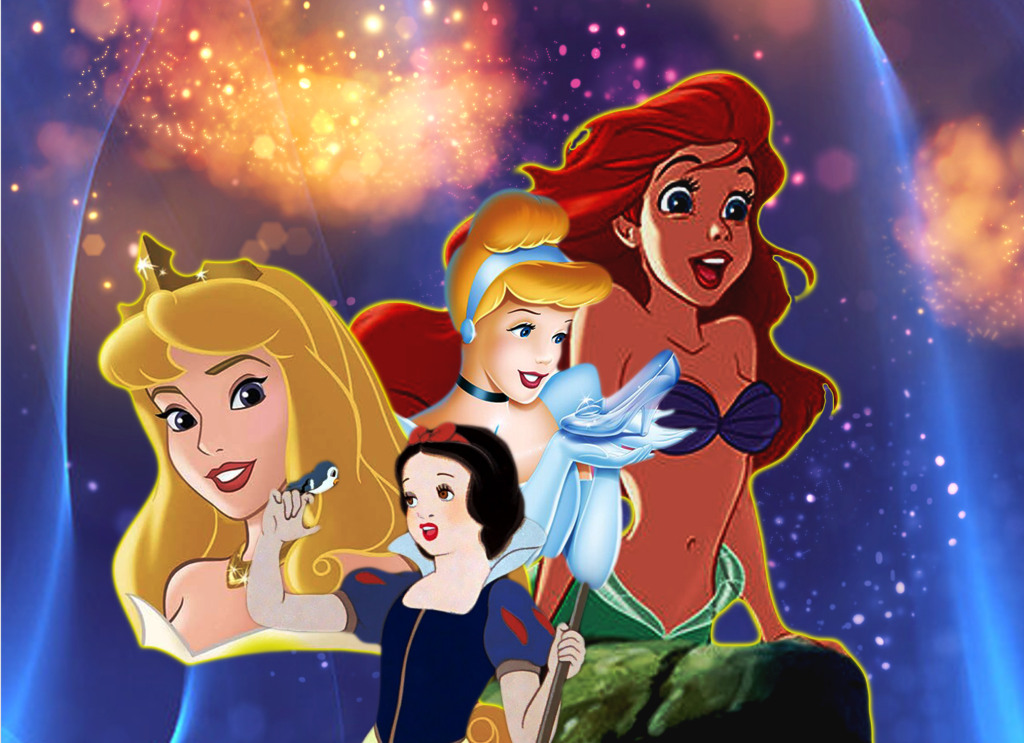
Kids these days are growing up fast. Babies are now being born pre-loaded with Tik Tok filters and how to create memes.
Parents today are complaining that social media is unraveling the moral fabric of society at the seams faster than you can say, “But what about the children!?” which, incidentally, is something they say right before they destroy their kids’ self-esteem and childhood innocence forever by exposing them to one of Disney’s fairy tale movies.
If you’ve ever read the original version of some of these fairy tales, you’d think you’re reading the diary of Jeffery Dahmer. They’re really dark. Heck, they make Shakespeare look like a middle-school drama teacher. They are full of murder, incest, mayhem, a hefty dose of moral bankruptcy, and a little bit of cannibalism thrown in for good measure.
Disney’s warm and fuzzy adaptations aren’t that much better either.
In the magical kingdom of Disney, where animals sing and dreams come true, hides a trove of moral puzzles wrapped in the glitter of classic fairy tales. These tales, presented with a side of catchy music, offer up a dish of questionable lessons.
Here, damsels often find their highest calling in the embrace of a prince they just met, while villains are defeated with a finality that leaves no chance for redemption.
Indeed, beneath the song and dance and the ‘happily-ever-afters,’ Disney’s adaptations might just be the apple offered to Snow White — seemingly sweet, but with a bite that leaves you questioning the flavor of the morals served.
Even though they’ve removed the obviously darker aspects, the more subtle moral corruptions — the ones that sneak their way into the subconscious — exist. And therein lies the problem. The sneaky covert theme in these Disney movies could be twisting youngsters morals without you even realizing it.
Disney’s seemingly innocent stories that ‘teach’ kids right and wrong, diversity, equity, and inclusion might actually be teaching them some messed-up stuff. It sounds far-fetched, but when you analyze some of Disney’s most popular fairy tale adaptations, it’s hard to ignore the evidence.
The Little Mermaid

Disney’s animated and controversial live action remake of The Little Mermaid — as you know — tells the story of a young mermaid who gives up her life in the sea to become human. We all know how these versions end — Ariel gets her prince, and they live happily ever after.
In the original version, however, the mermaid never married the prince and died in the end, because fairy tales, as they were, served as cautionary tales in medieval times. They taught valuable life lessons through the guise of fantasy. Back then, these cautionary tales were essential in shaping the moral compass of young readers. For that matter, Han’s version of The Little Mermaid is more meaningful.
Despite Disney’s best effort, its versions are worse because of the negative subliminal messages they contain. While they showcase a very delightful underwater adventure, the underpinning theme strikes at the very heart of self-acceptance.
Though Disney’s take on The Little Mermaid has many positive messages, there is one lesson in particular that I find problematic, which makes the controversy over the live-action film seem trite.
When you dig deeper into Disney’s The Little Mermaid, the subliminal message is teaching kids that chasing after acceptance while sacrificing one’s own identity and well-being is fine — as long as you do it with music.
Disney’s version teaches kids that a dogged obsession to the point of losing your identity is OK if it means that you can fit in or “be a part of that world.” It perpetuates the idea that fitting in is more important than being true to yourself.
Look, we all know that change is an essential part of life, and without it, we would never grow or learn new things about the world and ourselves.
However, this need to fit in has led many to make choices they wouldn’t normally make and suppress parts of their personality trying to fit in.
Sadly, Disney’s The Little Mermaid’s hidden theme is about a girl who gives up everything for a man she barely knows. It impresses upon young girls that they have to sacrifice themselves in order to get what they want, and rejection isn’t something they should expect in life. These are the messages that lie under Disney’s delightful underwater adventure.
The story of Snow White
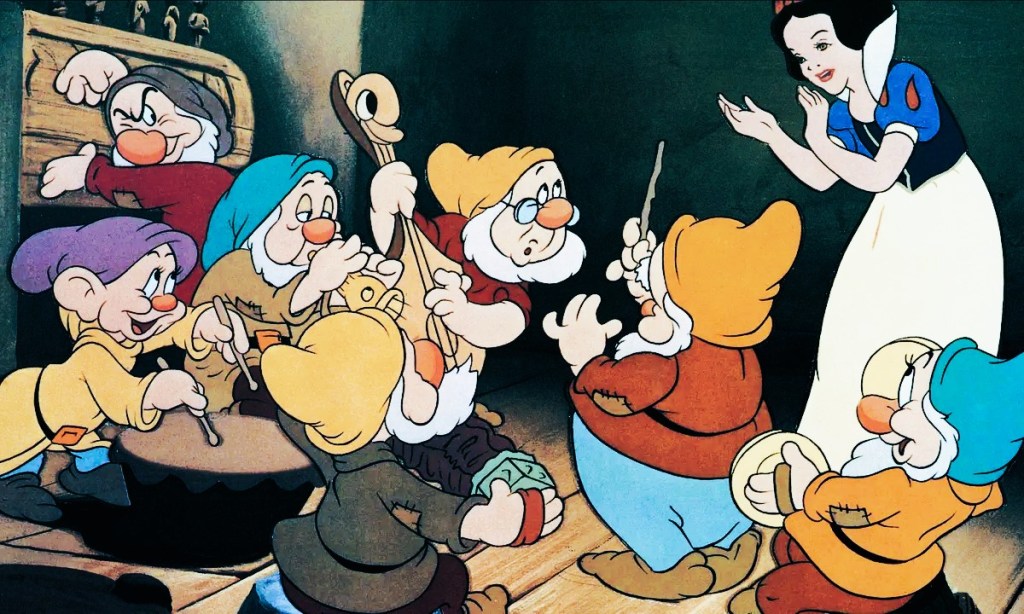
Did you know that in the original Brothers Grimm version, Snow White’s stepmother asks her hunter to kill Snow White and bring back her lungs and liver as proof?
Get this: Snow White was only seven when her stepmother wanted to off her.
Luckily, the hunter can’t bring himself to do it. He leaves her in the woods and brings back the organs of a boar to the queen instead. The queen then cooks them and eats them, not knowing they’re not humans.
Apart from the child abandonment, the huntsman is a pretty decent guy, don’t you think?
Later, when Snow White is lying in her glass coffin, the queen comes to visit and pricks her finger. She sucks the blood from her finger and tastes human flesh for the first time, realizing she’s been eating boar this whole time.
Disgusted, she throws herself down next to Snow White’s body and dies from a broken neck.
Centuries of editing have made Snow White more palatable, which culminated in the 1937 Disney classic, Snow White and the Seven Dwarfs.
Despite Disney’s best efforts to erase the murder for hire and the allusion to cannibalism, the story still teaches children some effed-up morals: that it’s OK for a young girl to be taken advantage of by seven grown men. Hey kids, exploitation is perfectly fine.
For the low price of having a roof over your head, we’ll just have you cook, clean, and do whatever else we desire for the next ten years.
At least she was happy and grateful to her diminutive masters for enslaving her. Not an ideal message for kids.
I’m beginning to think that Snow White actually lost her mind, and that’s why she thought she could talk to animals.
Cinderella

In the original Cinderella, the stepsisters are so desperate to win the prince’s hand that they cut off their own toes to fit into the glass slipper. When that doesn’t work, they take a knife to their heels.
As punishment for their crimes, doves peck out their eyes. Ouch.
In the Disney version, the stepsisters are just rude and ungrateful, with — thankfully — no physical mutilation involved.
But even without dismemberment, the message is still clear: if you don’t meet a man’s standards, change yourself until you do.
And then there’s Sleeping Beauty
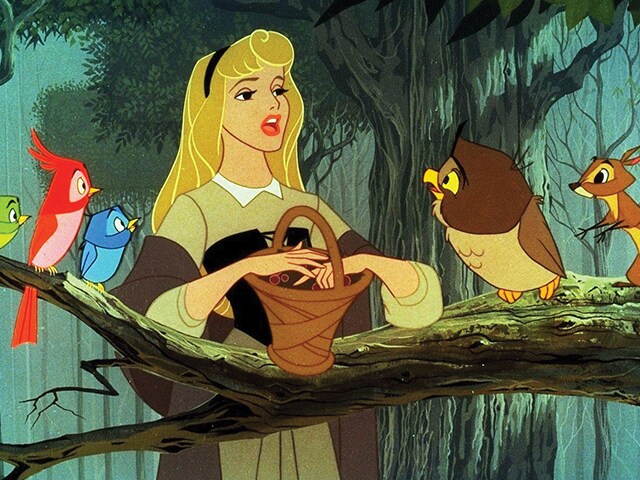
In the original story — oh dear lord — the king finds Sleeping Beauty in her castle and has his way with her while she’s asleep. She gives birth to twins, a boy and a girl.
The girl grows up to be just like her mother and is also assaulted by the king while she’s asleep. But the boy is different — he’s disgusted at what happened and simultaneously commits patricide and regicide.
In Disney’s version, Sleeping Beauty is in a castle guarded by a dragon. The prince slays the dragon and rescues her with a kiss.
What sort of message is that sending to kids, especially boys? No need to ask permission. I saved the day, so I’m taking my reward. In any case, if she can’t say no, then that means yes, obviously.
Not a Disney remake, but Goldilocks is another character with questionable morals
In one of the original versions (there are several), she breaks into a family of bears house, eats their food, and then takes a nap in their bed.
When the bears come home and find her, she wakes up and screams, causing the baby bear to have a heart attack and die.
Goldilocks then calmly walks out of the house, never to be seen again. In the end, she gets away with murder and breaking and entering.
In the edited version of Goldilocks, the little bear didn’t die. However, the burglary and the way Goldilocks creepily searches through the family’s stuff remain.
In recent years, there have been several stories in the news about people breaking into homes and eating food or sleeping in the beds of homeowners.
I suspect these burglars read Goldilocks as a kid.
The message is pretty clear in Goldilocks: if you’re blond or mildly attractive, then you have the privilege of burglarizing and destroying private property without consequences. Disney hasn’t yet produced a Goldilocks film, and I can see why. Not exactly a great role model for kids, is it?
Look, I’m sure when you let your kids watch the Disney version of these fairy tales, your intention isn’t to turn them into a weeping willow of anxiety, depression, with a skewed self-image of themselves.
The originals of many of these classic tales have one overriding theme: women being cruel to themselves and to one another, while men are seen as altruistic saviors. Disney, in its tireless quest for family-friendly entertainment, sanitized the original with bright colors, happier endings, and more obviously straightforward morals.
Yet within these seemingly warm, fuzzy, and visually pleasing movies, The House of Mouse inadvertently added some troubling elements beneath the surface: self-hatred, being happy with being an indentured servant, and an unhealthy obsession to the point of losing one’s identity.
Fortunately, in other movie studio adaptations of many of these stories, like 2012’s “Snow White and the Huntsman” and its 2016 sequel “Winter’s War,” the focus shifted to female empowerment. In these stories, the women see themselves as strong individuals who can achieve anything they set their minds to. And they can rely on other women for support.
Many of these reimagined tales have been able to avoid those questionable moral underpinnings that Disney seems unable to do.
So, next time your little one asks you to watch that Disney movie for the umpteenth time, maybe opt for something a little lighter, like The Silence of the Lambs.




 Screen Rated