
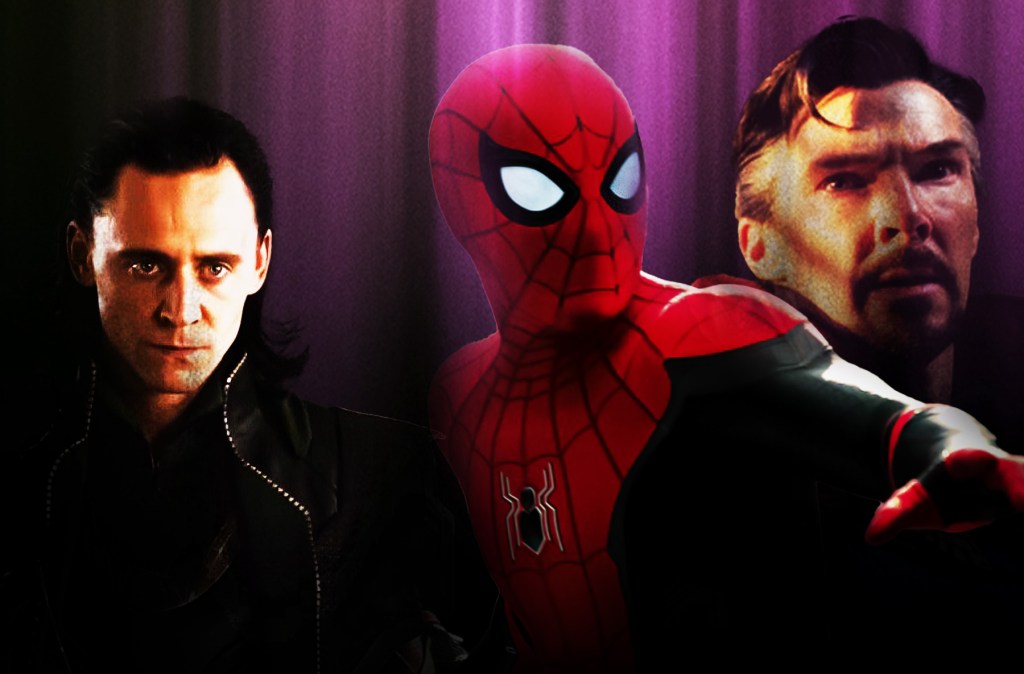
Long before “Doctor Strange in the Multiverse of Madness” opened portals to parallel worlds, the TVA deleted variants to protect the sacred timeline, the Avengers did a time heist, and Deadpool searched the MCU multiverse for a worthy Wolverine, storytellers across decades had already been hopping between dimensions, exploring strange realities, and asking, “What if the world was just… you know, different?” Before the Marvel Cinematic Universe Multiverse Saga, books, TV, and film had been tapping into that same wild, “there’s more than just this world” energy.
Some of these stories are obvious. Others? Not so much. So let’s jump into our own multiversal travel machine and go back, starting in the ‘90s and working our way into literary history, to spotlight 12 pieces of media that flirted with, hinted at, or fully dove into the multiverse way before the MCU made it a household name.
1. Sliders (1995–2000)

What if one small change in history reshaped the entire world?
That’s the hook behind Sliders, a cult sci-fi series that ran from the mid-’90s into the early 2000s. The show follows Quinn Mallory, a brilliant college student who invents a remote control device that opens wormholes to alternate Earths. After losing the coordinate to their earth and trying to find their way back home, Quin and his companions “slide” from world to world, where each one is just a little or massively different than the last. Sometimes women rule the world. Sometimes the U.S. lost the Revolutionary War. You get the idea. Sliders brought multiversal storytelling into people’s living rooms every week, long before Loki ever branched a timeline. [1]
2. Back to the Future Part II (1989)
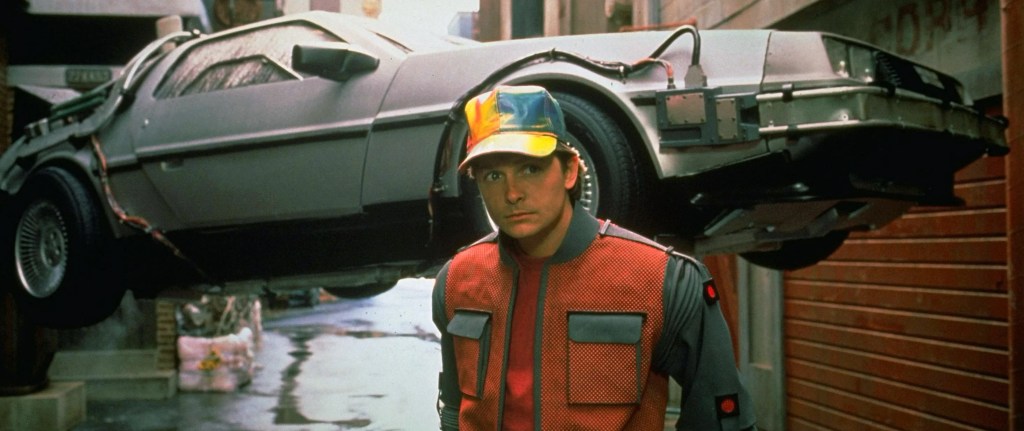
Time travel may be the focus, but what BTTF II did better than most was introduce the concept of branching timelines. When Biff steals the sports almanac and changes the past, it creates a distorted version of 1985. It’s a new, darker timeline where Biff is rich and powerful. Doc Brown even draws it on a chalkboard. Doc Brown’s chalkboard lecture gave audiences their first course in alternate realities, planting seeds the Avengers would harvest decades later, even though Endgame threw a little shade at BTTF II time mechanics. The concept of altering the past to create a different future has become a classic multiverse trope. And this was back in the late ’80s, before cinematic universes were even a thing. [2]
3. The NeverEnding Story (1984)
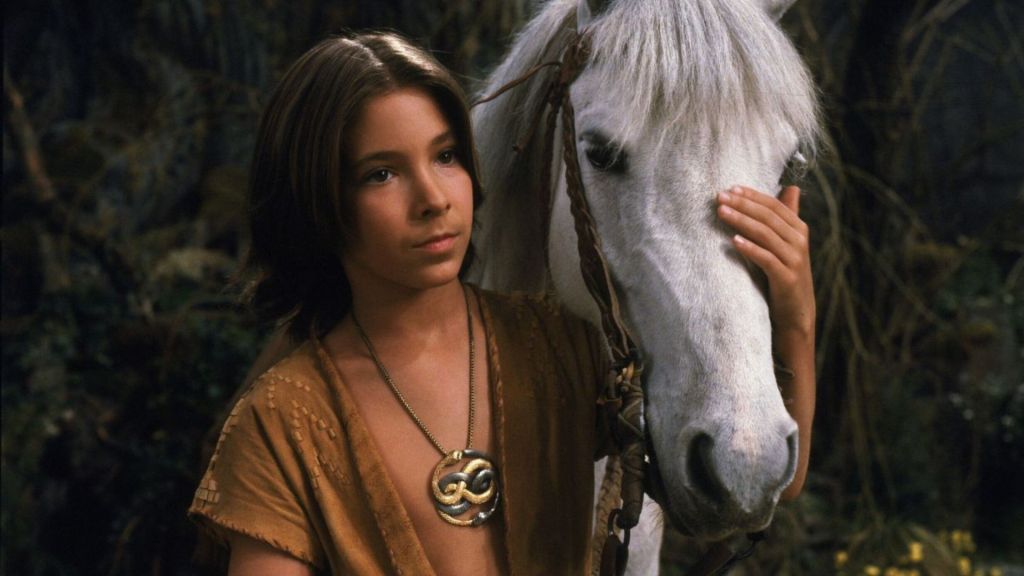
Technically a fantasy tale, The NeverEnding Story flirts with multiverse ideas through its fourth-wall-breaking story. The story of Bastian reading about Atreyu and Fantasia and then realizing he’s part of the story himself hints at layered realities where imagination is reality. Fantasia exists because someone is imagining it. Once that stops, it crumbles. It’s not multiversal in the scientific sense. But, in the “worlds within worlds” way? Absolutely.
4. The Dark Tower: The Gunslinger (1982)

Long before MCU post-credit scenes teased crossovers, incursions, and having Spider-Men showing up in threes, Stephen King was crossing over vampires, telepaths, killer clowns, and cowboy knights into a single, Dark Tower. Almost every Stephen King story revolves around the Dark Tower. In King’s multiverse of novels, all realities are “levels of the Tower.” Roland Deschain, the main protagonist, briefly passes a deserted version of Jerusalem’s Lot. Even Father Callahan from Salem’s Lot made an appearance in book five of the Dark Tower series as a guide to Roland. Randall Flagg, Stephen King’s evil wizard from The Stand, also appears as the main antagonist in The Dark Tower. He is often referred to as “the Man in Black” or “Walter Padick.” He is essentially the Kang of King’s multiverse.
The Dark Tower is the beating heart of all of King’s works. Books like Insomnia, Hearts in Atlantis, It, The Talisman, and Black House are all a part of the Dark Tower mythology. Think of it as the original TVA from the MCU. It’s a hub that links alternate worlds, timelines, and characters across books, genres, and realities.
Related post
5. Star Trek: “Mirror, Mirror” (1967)

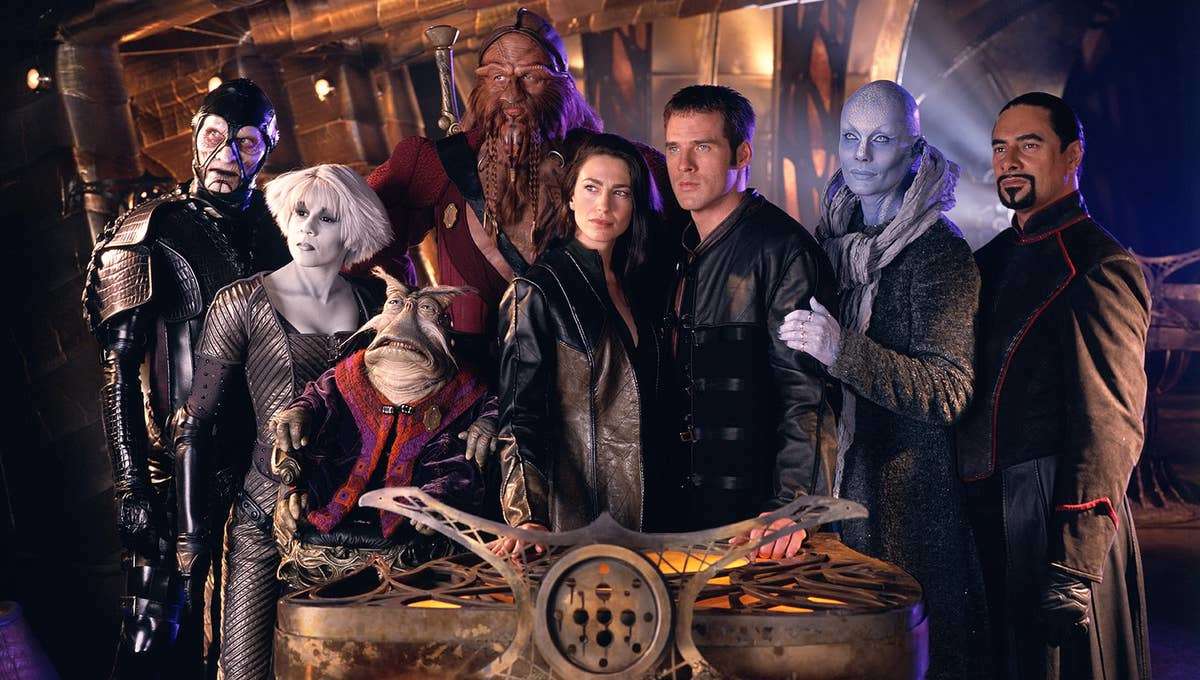
When “Mirror, Mirror” aired in October 1967, it did more than give Spock a goatee; it showed fans the ruthless Terran Empire hiding on the other side of an ion storm transporter accident. In that single hour, Kirk discovers a Starfleet where promotions come by assassination, agonizer booths replace the brig, and a Tantalus Field lets officers vaporize rivals with the push of a button. The episode became an instant classic that is frequently ranked in the Original Series’ top ten lists. The goateed Mirror Spock made the “evil twin with facial hair” a trope, making facial hair shorthand for alternate reality evil.
More importantly, “Mirror, Mirror” made parallel timeline canon. Deep Space Nine returned five times, beginning with “Crossover” (1994), to reveal that the Terran Empire had collapsed into slavery under a Klingon and Cardassian alliance, giving us Intendant Kira, Rebel Smiley O’Brien, and a prime Sisko who had to impersonate his dead counterpart to trigger a human rebellion. Star Trek: Enterprise even joined in the fun with the two-part episode “In a Mirror, Darkly” (2005), set entirely in the Mirror Universe and linking the original series’ missing USS Defiant so the NX‑01 crew could seize a 23rd century starship and stage a coup.
The “Mirror, Mirror” concept proved so popular that it led to an entire season of Star Trek: Discovery. Captain Lorca’s rough command style was finally explained when the series revealed he was a Terran imposter planning to dethrone Emperor Philippa Georgiou.
Meanwhile, the big-screen reboot did its own divergent reality. J J Abrams’s 2009 Star Trek blew up the prime timeline when the Romulan miner Nero destroyed the USS Kelvin in 2233. It created the Kelvin Timeline. In that branch, George Kirk dies a hero, Jim grows up fatherless and reckless, and Vulcan is destroyed. The Kelvin Timeline gave us three films, Star Trek (2009), Into Darkness (2013), and Beyond (2016), and a timeline forever out of sync with Prime Star Trek history. Star Trek has been jumping between universes since 1967, decades before the MCU turned variants and branching timelines into blockbusters.
6. The Man in the High Castle the Novel (1962)
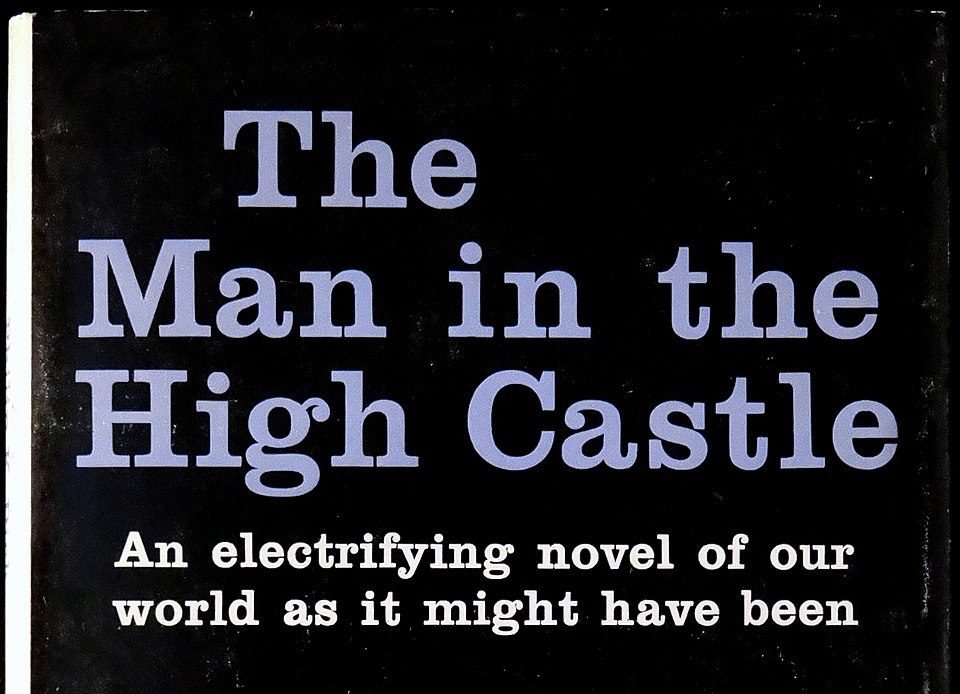
Philip K. Dick asked the nightmare question, “What if the Axis won WWII?” The story unfolds from this perspective, dropping readers into a United States where the northeastern side of the country is ruled by the Nazis and the Pacific states by Imperial Japan. Within this grim alternate Earth, characters trade underground newsreels that suggest to them there might be other universes, and one that looks suspiciously like ours, where the Allied powers won WWII. Where Sliders uses a wormhole to travel to these what-if Earths, The Man in the High Castle uses tapes to showcase the concept of a multiverse. Dick’s multiverse story predated Marvel’s sliding doors by half a century.
7. Alice’s Adventures in Wonderland (1951 animated film, based on the 1865 novel)

Welcome to a world where logic took a tea break.
Whether it’s Disney’s 1951 film or Lewis Carroll’s Victorian original, Alice in Wonderland is basically a multiverse fairy tale. A young girl falls down a rabbit hole and into a world where rules don’t make much sense, time’s irrelevant, and talking cats give cryptic advice. Wonderland may not be a parallel Earth, but it’s undeniably a separate dimension with its own logic. Alice in Wonderland helped lay the groundwork for portals and dreamlike storytelling. Without Alice, Doctor Strange might still be a surgeon.
8. It’s a Wonderful Life (1946)

Long before the TVA bureaucracy, It’s a Wonderful Life gave audiences their first bittersweet taste of the butterfly effect. This Christmas classic is secretly a multiverse morality tale and thematically a What If…? episode. George Bailey, on the brink of despair, is shown by an angel what the world would be like if he had never been born. Clarence saves George by helping him see his place in the world by removing him from it. proving a single life can change an entire timeline. If Marvel made this today, it would involve a Nexus Event. In 1946, it just involved a bridge and a bell ringing. George Bailey is the original Anchor Being. It’s a Wonderful Life might be the most wholesome alternate reality story ever made.
9. The Wizard of Oz (1939)

Toto, we’re not in Kansas anymore.
Whether you saw it as a dream, a psychic astral hop, or a literal dimension shift, Dorothy’s technicolor detour to Oz is portal fiction royalty. When Dorothy lands in Oz, she’s no longer in the world she knows. Oz is a place of magic, talking scarecrows, and evil witches, a world all accessible by natural disaster and ended by the power of belief and clicking heels. Oz is essentially a pocket universe. Whether you believe it’s all a dream or not, the idea that an ordinary girl can be swept into an entirely different realm and back again? That’s multiverse storytelling in its purest fairytale form.
10. A Connecticut Yankee in King Arthur’s Court (1889 novel by Mark Twain)
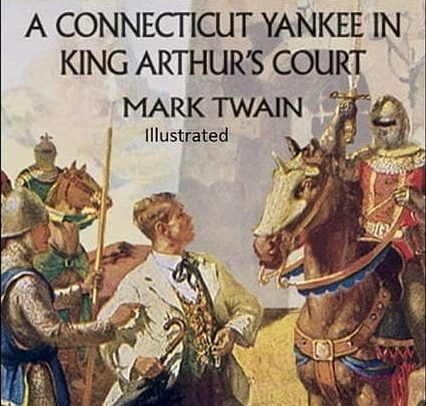
This one, for many Gen-Xers, was required reading in middle school. In this novel, Twain sends a 19th-century man back to Camelot after a knock on the head. The result is a hilarious culture clash with proto-science fiction and some early timeline meddling. Hank Morgan brings 1800s technology to King Arthur’s time, which predictably throws everything into chaos. It’s time travel, yes, but also one of the first works to explore how transplanting a person across eras could radically alter the world. That’s multiverse adjacent, if not fully multiverse in structure. A Connecticut Yankee in King Arthur’s Court is the blueprint for the hero out of time trope.
Still, the end of the novel leaves you questioning whether Hank’s story was real or not. Despite this, Twain’s ending, with Hank trapped in a dreamlike limbo between eras just before he dies, hints at realities overlapping, similar to Doctor Strange dreaming of his alternate reality selves.
11. The Divine Comedy (Dante, early 1300s)

Okay, we’re going way back for this one. Dante’s journey through Hell, Purgatory, and Paradise is equally a religious allegory and an exploration of layered, coexisting realms, each with its own rules and hierarchy. Remember that scene in Multiverse of Madness where Dr. Strange and America Chavez fall into the star-shaped portal and stumble through several universes? Even though the scene was brief, it showed wildly different universes. You could argue that The Divine Comedy is the original dimension-hopping epic. Each realm that Dante stumbled through functions as its own universe, and Dante passes through them all, learning, evolving, and eventually transcending. It’s the spiritual multiverse before there were comic books, screenwriters, or DeLoreans traveling through space and time.
12. Twin Peaks (1990–1991)
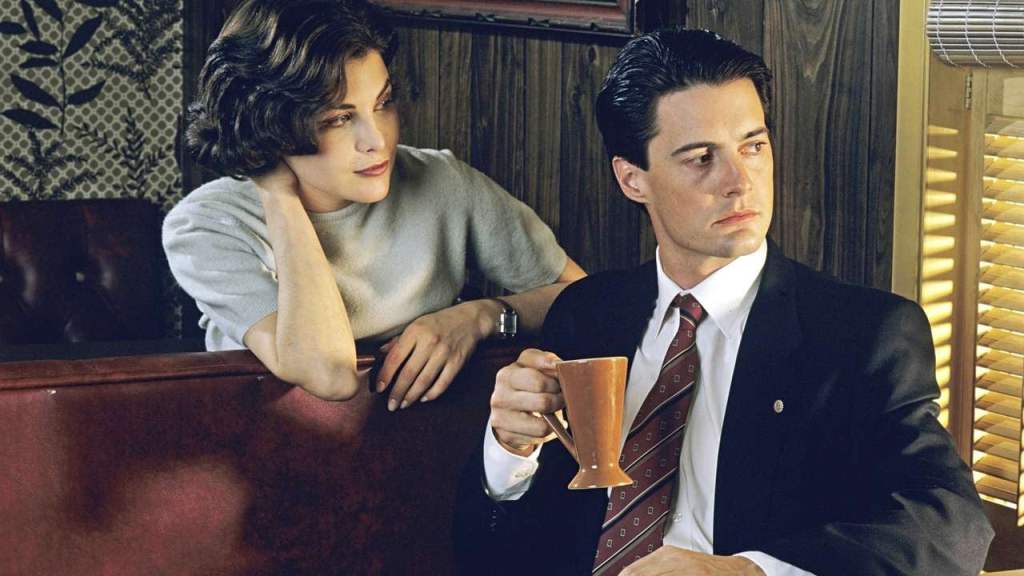
David Lynch’s fever dream has a weird story structure that plays like a crash course in alternate realities. Between the Black Lodge, doppelgängers, and time loops, Twin Peaks opened a spiritual and metaphysical door to a world just beneath the surface. The 2017 revival doubled down on this with a finale that blurred timelines and characters so thoroughly that fans are still arguing over what reality actually is. Multiverse adjacent? Maybe. But Twin Peaks proved reality could be warped and still be primetime.
Before the MCU connected every character with a portal, storytellers across centuries had already been breaking the boundaries of space, time, and logic. Whether by rabbit hole, wormhole, or a DeLorean that runs on trash, the multiverse has always been a way to explore alternate realities and alternate selves. Marvel might have made the multiverse mainstream, but they’re just the latest travelers in a long, strange trip that’s been warping minds for centuries.




 Screen Rated