
The word zombie feels modern, like one of those made-up words that comes from the media world, like “Warp Drive.” But the fact is the word zombie has a long history behind it. It crossed oceans, changed meanings, and kept finding new ways to stay alive every time someone spoke it. The story of zombie is really the story of how language travels and adapts.
Roots in Africa
Long before the undead took over TV shows and movies, the sound of zombie lived in African languages, but instead of the walking dead, it had a different meaning. In the Kikongo language, the word nzambi is the word for a divine spirit. In Kimbundu, a Bantu language in Angola, the word nzúmbe is used for a ghost. These words do not describe a corpse that wants to eat your brains. They are deeply rooted in the Afro-supernatural and spiritual realm, carrying with them a deep sense of fear and respect.
When people from Central and West Africa were forced across the Atlantic, their words came with them. Even though they were ripped from their homeland, they held on to their culture and beliefs. They kept praying, singing, and naming. Out of that persistence the seed of zombie took root in the New World.
Haiti gives the word its shape
In Saint Domingue, later Haiti, African beliefs met French and Catholic traditions and formed Vodou. Out of that fusion came the zonbi. Still, not the movie monster we’ve come to know. The zonbi referred to a person whose body was taken and used. A human stripped of will by a sorcerer known as a bokor. The zonbi was a victim first.
This at the time was an allegory for bondage. The word reflected the reality of slavery itself: a body controlled by someone else, working without choice and existing without a sense of self. It also explains why early reports described zombies as workers on plantations rather than ghouls in graveyards. The word took on the shape of a social horror long before it became a cinematic one. Over time, however, writer who visited Haiti began to exaggerate and twist the Haitian idea. What began as a victim enslaved through sorcery became reimagined as a corpse literally raised from the dead. That darker interpretation stuck, and it was this version that English-speaking audiences came to know.
First sightings in english
The word zombie first found its way into English during the early 1800s. One of its first uses was by Robert Southey, yes, the same guy who wrote Goldilocks and the Three Bears. In his History of Brazil (1810), Southey used the word Zombi, without the “e,” to describe the Afro-Brazilian god Nzambi. What he was describing, however, was an African spiritual figure rather than the walking corpse. For Southey, “Zombi” meant “African god.”
In the latter half of the 19th century, the word began drifting from Southey’s “African god” usage toward the Haitian zonbi stories. Travel writers visiting Haiti introduced English readers to strange and exoticized accounts of Vodou. One example is Spenser St. John, the British consul in Port-au-Prince, who in his 1884 book Hayti, or, The Black Republic described zombies as corpses revived by sorcerers, though his writing was steeped in sensationalism and prejudice. Similarly, Lafcadio Hearn, a journalist and folklorist, collected Haitian stories in the 1880s, further cementing the association between zombies and the walking dead.
From plantation to pop culture
By the early 20th century, the zombie was firmly established in English as a creature of horror. In 1929, William Seabrook’s The Magic Island popularized the Haitian zombie for American readers, describing it as a soulless worker raised from the grave. His account directly influenced the first zombie film, White Zombie (1932), starring Bela Lugosi. From there, the zombie began mutating again. George A. Romero’s Night of the Living Dead (1968) redefined it for a new era, transforming the zombie into a flesh-eating monster born of contagion rather than sorcery. That version, featuring mindless hordes and unstoppable apocalypse, became the one we know today.
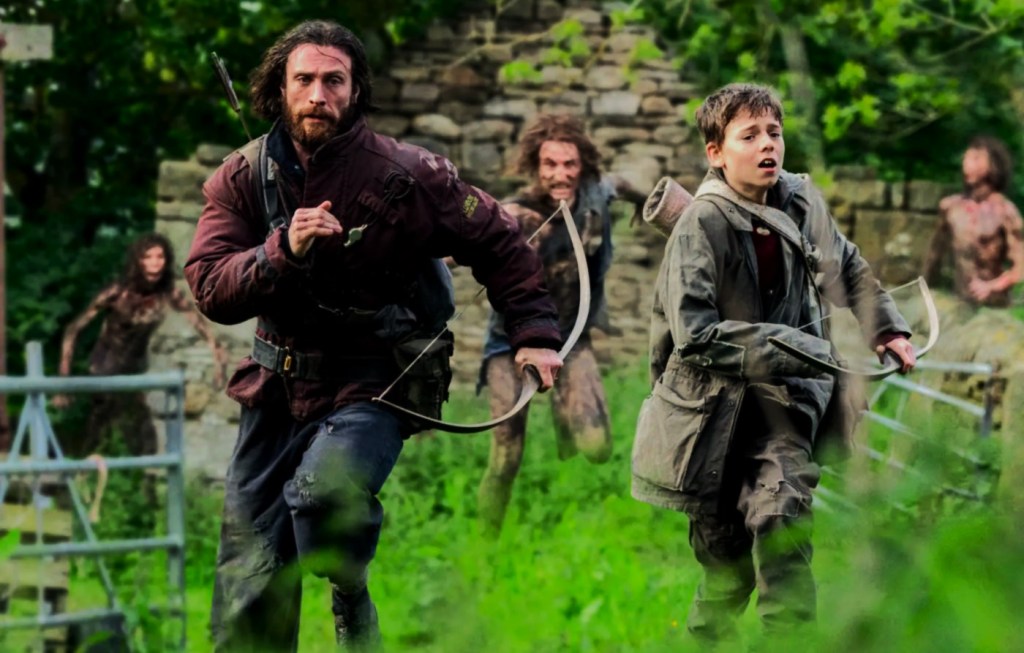
And pop culture never looked back. Zombies marched into comics, video games, and TV shows. They filled malls in Dawn of the Dead, sprinted through 28 Days Later, and swarmed in World War Z. They became unstoppable waves in The Walking Dead and digital nightmares in Resident Evil. Each new version added a wrinkle, from fast zombies to smart zombies to pandemic zombies, but they all carried the same core terror: losing control of life, body, or society itself.
From victim to monster
The zombie began as a character of enslavement in Haitian Vodou, a person robbed of self and freedom. But as the idea traveled, it was reframed into the dead rising from the grave. The victim turned into the monster. From African spirits to Haitian allegories of slavery to Hollywood horror, the word has always carried fear. The target of that fear just keeps changing. The zombie is a survivor, not just on screen but in speech. It has changed its bite, but it has never lost its grip.



 Screen Rated