
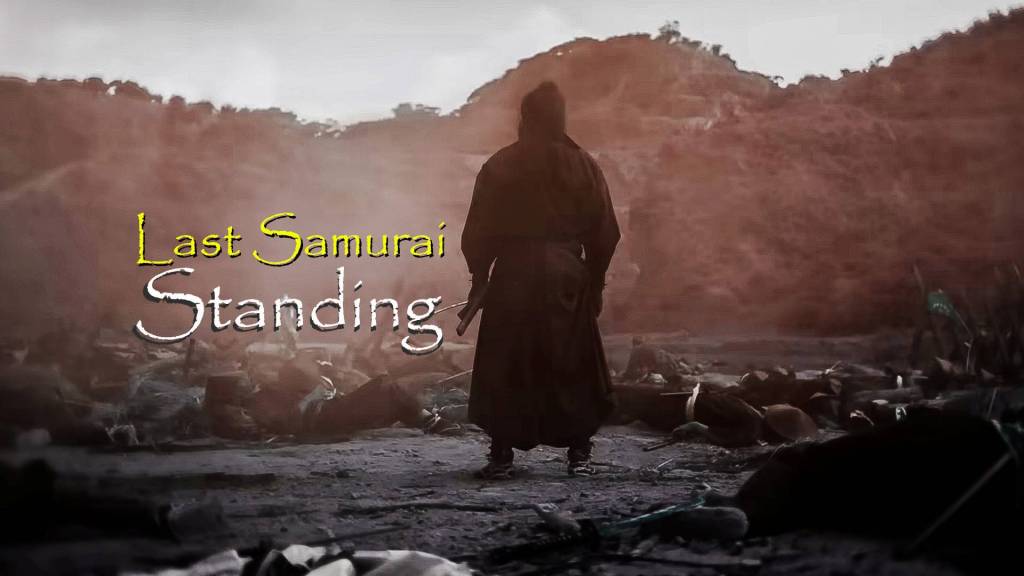
Netflix has delivered one of its finest action series to date. For fans of historical dramas, battle royale, or character driven action, this is a series worth watching.
There have been countless stories built around tournaments, survival games, and brutal battle royales, but very few commit to the blade with the intensity that Last Samurai Standing does. This Netflix adaptation of Shogo Imamura’s manga Ikusagami feels like a collision of several familiar ideas, yet it manages to carve out its own identity. Imagine the tension of Squid Game, the grit of Battle Royale, and the gloomy atmosphere of the Meiji Restoration. Now remove guns, dress everyone in late nineteenth century garments, and tell them to settle everything with a sword. What you get is a series that feels raw, emotional, and often overwhelming in the best possible way.
Set in 1878 and later 1879, the series centers on Shujiro Saga, played by Junichi Okada. Shujiro is a former assassin whose reputation once inspired fear on the battlefield. He fought during the Boshin War, where the old order crumbled under the force of cannons and rifles. The samurai class he belonged to lost not just the war but their place in society. When we meet him, he is no longer the feared Manslayer. He is a hollowed-out man trying to keep his family alive during a cholera outbreak that has already taken one child.
The series wastes no time creating empathy for Shujiro’s situation. He is broke, traumatized, and convinced his best years are behind him. His wife suffers in silence as illness sweeps through their home, and his young son hovers somewhere between hope and catastrophe. Then, out of nowhere, a mysterious invitation arrives. It offers a life changing amount of money to any warrior willing to take part in a competitive journey from Kyoto to Tokyo. The catch is simple. Each participant must take numbered tags from opponents, and the only realistic way to do that is to kill them.
Shujiro joins nearly three hundred other desperate fighters inside the courtyard of Tenryu ji Temple. The show builds tension here with remarkable efficiency. Soldiers with rifles surround the entire group. Contestants size each other up. Some smile with confidence. Others tremble with fear. The smug overseer Enju announces the rules, making it clear this is more sport than noble contest. As the countdown begins, Shujiro is visibly reluctant to even draw his sword. When the mayhem begins, every hesitation he carries from past trauma crashes against the violence exploding around him.
The show’s opening battle sets the tone for the entire series. Limbs fly, blood sprays, and swords cut through the noise like flashes of lightning. Last Samurai Standing never hides from the ugliness of what these men are forced to do. Yet somehow, it finds humanity in the chaos. Shujiro is not driven by ego or glory. He is a broken man trying to protect what little he has left. This becomes especially clear once he crosses paths with Futaba Katsuki, a teenage girl who joins the tournament for the sake of her sick mother. Yumia Fujisaki gives Futaba such tenderness that it creates a powerful contrast with the violent world around her.
More sword and revenge

Ghost of Yotei Review – Why This PS5 Exclusive Proves Video Games Are Art
Ghost of Yotei on PS5 is a breathtaking exclusive that blends stunning visuals, fluid combat, and emotional storytelling into a…

“The Crow” Revenge in the Garden of Love and Drugs
The Crow is a darker, grittier take on its 1994 predecessor, featuring Eric Draven as a troubled anti-hero intertwined with…
Together, Shujiro and Futaba form the emotional foundation of the story. Their bond is not parental, nor is it a replacement for his lost daughter. It is something simpler. A connection between two people fighting to stay alive without losing their compassion. Along the journey they team up with Shujiro’s sister Iroha and the cunning strategist Kyojin Tsuge. Both characters add personality to the team and help balance the gloom of the setting with moments of charm and unexpected humor.
Visually, the series is stunning. Directors Michihito Fujii and Kento Yamaguchi expand the scope of the Tokaido route to create sweeping backdrops of mountains, forests, temples, and towns. Every fight feels like a dance that blends beauty and brutality. There are long takes where the camera follows warriors through frantic clashes, giving the action an immersive texture. It does not rely on flashy effects or elaborate wirework. Instead, the choreography is grounded, practical, and painful. Okada, who also worked as the fight choreographer, brings authenticity to every movement.
The story uses the Meiji era to explore themes of obsolescence and survival. Samurai were once the backbone of Japan’s military structure. But political reform, Westernization, and new technology rapidly erased their purpose. Many of the contestants join the game because they have no place in the modern world. Some fight for money, others for pride, and a few simply because violence is the only thing they know. The show handles this shift with enough nuance to make the world feel lived in without turning the historical backdrop into a lecture.

It does, however, suffer from one noticeable flaw. There are far too many characters introduced for only six episodes. Several warriors receive elaborate flashbacks only to be killed minutes later. The series tries to give personality to dozens of fighters, but it is impossible to flesh them all out. While the main cast is strong, the story sometimes feels stretched thin trying to honor too many side stories.
Even with that issue, Last Samurai Standing never loses momentum for long. It moves with the confidence of a production that knows its strengths. The action never slows down for too long. The emotional beats are never drowned out by violence. The pacing remains steady, and the show builds toward a finale filled with fireworks, relentless swordplay, and a sense of dread that makes every choice feel significant.
Shujiro remains the anchor through every twist and confrontation. Okada’s performance is not flashy. He rarely raises his voice. He does not try to look cool or superhuman. His strength comes from the weight he carries in every scene. This is a man trying to outrun his past while keeping his humanity intact. His pain, determination, and exhaustion feel real, and they make every battle more personal.
The show also benefits from its female characters, who carry some of the most dynamic arcs. Futaba’s innocence becomes a guiding light for Shujiro. Iroha brings both skill and emotional complexity. Their presence gives the story texture and softens the harsher edges of the violence.
In the end, Last Samurai Standing stands out not just for its action but for its heart. It takes familiar concepts and reshapes them into a story that feels rich and engaging. It is a historical drama and a survival story, but it is also an intimate look at people caught between eras. It offers spectacle, emotion, and characters worth investing in. And while it clearly draws inspiration from modern and classic works alike, it holds its own as one of the most gripping action series of the year.






 Screen Rated